Showing posts with label book club. Show all posts

Monday, July 9, 2012

Meeting Notes: Ender's Game

At the most recent book club, we had two things to celebrate: book club and Marissa's birthday! Courtney hosted, and she made delicious pizza squares and cupcakes. The cupcakes were homemade banana bread with cream cheese frosting—yummy—and were in honor of Marissa's big day.


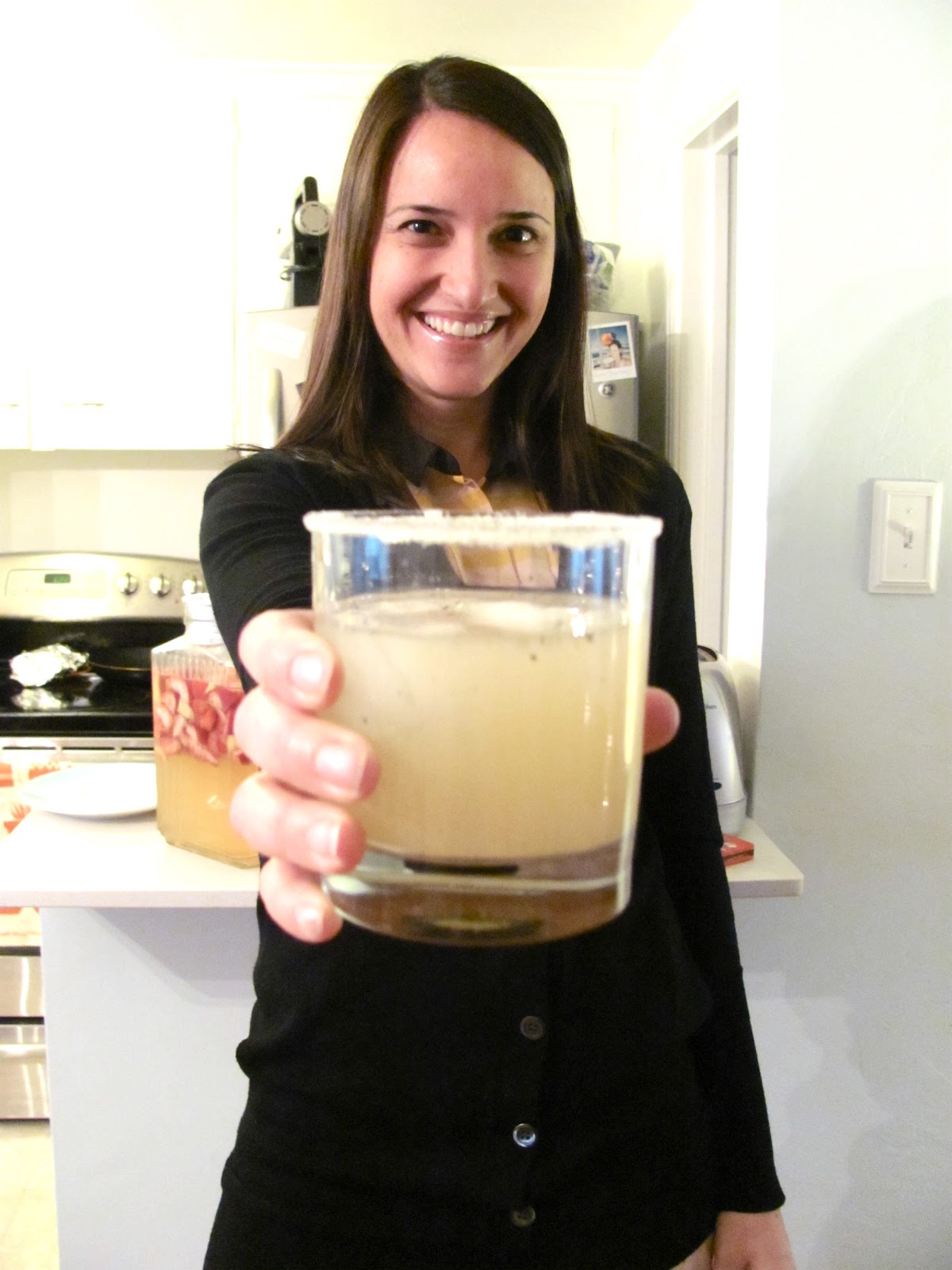
She also made a pear vanilla cocktail found on our friend Dulcie's blog. Unfortunately, our book club is cursed, so that even if the days prior to and following it are beautiful, it is always chilly and rainy at our bookish get-togethers. Still, the summery drinks were enjoyed by all.


Here is the gift basket we made Marissa. Because she was so busy with school and work, we wanted to give her a variety of things to help her relax and/or get her mind off things, like (obviously) The Hunger Games.


You see that Courtney had to throw on her fancy rain coat before we went out due to the inclement weather (after the official meeting/discussion portion of the evening had concluded). One of these days, we'll get to have a summery backyard book club.

Review/Discussion
Only one of the Bookworms finished Ender's Game before the meeting. One of us was in the family way, one was finishing up her semester, and the other two were just plain lazy. Well, that and they weren't totally taken with the novel. Ender's Game is a novel about children in a future world where aliens (called "buggers") are a real threat are brought up to be vicious soldiers. It won the Hugo and the Nebula awards, two of science fiction's highest honors. But for whatever reason, it just didn't draw all of us in. Courtney's husband heard what our next read was and said, "Yeah, that's a great book if your a seventh-grade boy." We didn't feel quite that way about it, but still I wouldn't say it was our favorite read. Which brings us to ratings: Kayla gave it 3.8 stars (out of 5), I gave it 3, and Courtney gave it 3.5, and the words we associated with it were "giant," "bugger," and "simulation."

To be more specific, some of us were a little bored by all the mock-battle scenes, of which there are a lot. I personally cannot visualize the battle maneuvers the book describes, so those became a great opportunity for me to zone out. This sentiment wasn't universally felt by all the Bookworms, nor was the next. Some of us had a hard time relating to the main characters, including Ender. I think we found the children's cold intellect, aloofness, and violent tendencies unlikeable. But, we also wondered how much of that was supposed to be due to their society and their experiences at the relentless battle school (nature versus nurture). After all, it was their society that placed such value on those characteristics and their society that created the battle school they attended. On the other hand, Ender's brother never attended battle school, and he was basically a psychopath, and Ender himself killed another child before he ever started serious training. Ender does become more vulnerable at the end and reveals his desire for love and affection, which he's never received. Courtney wondered if there were religious undertones, e.g., everyone is capable of great evil but must fight those tendencies. We weren't sure if the name Peter (Ender's brother) had religious undertones, and a quick Internet search told me that Peter showed a lack of faith or courage on a couple of occasions, but ultimately he never stopped believing in Jesus and was fundamental in establishing Christianity after Jesus's crucifixion ... for what that's worth. On another positive note, there are a few twists at the end that make it more interesting, and we've also heard that the second book is much more engaging.

–Bess

Thursday, May 3, 2012

Meeting Notes: The Tiger's Wife

Our last book was The Tiger's Wife by Tea Obreht. We met at Bess's house for Sangria and bruscetta.


Kayla wore her awesome tiger shirt, complete with a braided tail on the back.

Sassy, right?


Here is Bess's summary of our reaction to the book:


Honestly, the bookworms were ambivalent about the much-praised The Tiger's Wife by Téa Obreht. Book-clubber Melisa had read an online review that said the book was boring. It may have tainted her read, but she had to keep asking herself, "Am I bored?" though the answer turned out to be no, not exactly. I also read a review, in the Guardian, and a line it ("[A]fter meeting innumerable exotic characters, it dawned on me that the back-stories stand in for a story, and style stands in for emotion.") ran through my head again and again while reading. At the same time, I'd say this book gave the bookworms so many things to talk about and, I would say, resulted in one of our best discussions yet. In my opinion, it's a fantastic book with layers and layers of meaning, one you can't understand fully on the first reading--but it lacks a strong central story that keeps readers engaged.

The story is about a young doctor whose beloved grandfather, also a doctor, has just died. His death was expected (by her at least), but it occurred in a strange town hundreds of miles from his home. Rather than openly mourning, she privately decides to figure out what he was doing in that town and why. She accepts a short-term medical position in a town "across the border" as she embarks on this emotional journey. While there, she confronts the reality of her country's political and cultural situation while also learning more about her grandfather, and the political and cultural forces that shaped his world.

The Tiger's Wife is really a story about a region ravaged by a seemingly never-ending war and the effect that has on generations of people. The main character learns regional folktales as she goes as she remembers stories her grandfather told her, and the one thing these stories have in common is war. As a result, the effect of war becomes one of the central themes of the novel. One line stood out to me: "When your fight has purpose--to free you from something, to interfere on behalf of an innocent--it has hope of finality. When the fight is about unraveling--when it is about your name, the places to which your blood is anchored, the attachment of your name to some landmark or event--there is nothing but hate, and the long, slow progression of people who feed on it and are fed on it, meticulously, by the ones who come before them. Then the fight is endless, and comes in waves and waves, but always retains its capacity to surprise those who hope against it." She obviously believes her country's wars are of the latter variety, and the result is mistrust, confusion, disallusionment, and meanness of spirit ... but hope seems to remain.

Another central theme covered is whether a history book is a more accurate representation of history than a person who lived through the events in question. Obreht never gives the name of her country, the names of surrounding countries, or the names of the leaders who initiated the violence. We decided this must be because she doesn't want to be responsible for giving us a history lesson, but instead wants to share what it felt like for real people to live through several periods of peace and war. Knowing that the author lived in Serbia until age 12 allows you to surmise that she's talking about that region of the world. That's a nice thing to know when reading, but you do understand the author's message without knowing the locale. A connected question is what is more real, our beliefs about reality or the physical laws of the universe. Obreht shares a lot of unbelievable stories: a deathless man; a tiger who lives quietly beside a small village; the tiger's wife, a young woman who is able to befriend the tiger. The narrator never says if she believes the stories or not. She just lets them sit there for us to decide. We thought this got at the power that stories have for people. The narrator goes on to say, "It's possible to reduce the tiger's attachment to some predictable accident of nature, to make him as mysterious as a bear rummaging through a pile of overturned trash cans--but that is not my grandfather's tiger; that is not the tiger on whose account my grandfather carriedThe Jungle Book in his pocket every day for the rest of his life, the tiger my grandfather kept at his side during the war, and the long year he and Mother Vera struggled in the City...." Her grandfather needed to believe the story of the tiger. I think it reminded him that humans, animals, and even nature can survive terrible things, even when those terrible things are piled upon us--not always and not indefinitely, but it is possible.

Toward the end of the night, Courtney said, "I like everything you guys are saying right now." I think that sums up our experience of the book. It was interesting to read, and even more interesting to think and talk about.

Monday, January 30, 2012

Meeting Notes: Delirium

Marissa hosted our January book club. She made baked brie, a delicious fig salad, and a fancy homemade lavender cello drink. Everything was perfect... Except for our response to the book. Definitely not one of our favorites. In other news, I created these little star icons (Kayla's good idea), so that you'd be able to see our individual reviews.

Do you love Bess's new glasses?

 
That's me drinking the lavender cello and champagne concoction. 


And Marissa played a prelude to our videos on her piano.

A brief summary from the bookworms:
[SPOILER ALERT]
I know a lot of people five-starred Delirium. And the bookworms nearly unanimously loved Before I Fall. However, we just didn't feel the same way about Lauren Oliver's second novel. As Courtney said, "It was hard to believe it was her second novel, after she'd already written Before I Fall." What we praised in her first effort was the characterization, emotional resonance, and carefully placed lyricism. Delirium had two great characters in Hana and Alex, but unfortunately, Lena, the main character, didn't seem that alive. It could be that the author wanted her to be an unlikely heroine, or maybe she just didn't fully figure Lena out. Also, Lauren Oliver is talented at writing descriptively and poetically, but in this case, we think she overdid it. The drawn-out descriptions pulled us out of the story, and sometimes they were a tad corny or just didn't work. I would also say we were a little disappointed in the storytelling itself. The novel sounds so exciting, but it just doesn't end up being as thrilling as it promises to be. One last little note, I think Delirium might have been shaped and pitched in a way that made it lose complexity. It sounds like it's a novel about a world that bans passionate love, and much of the society literature the author includes focuses on that. But really it's a world that forbids all kinds of love, even between a parent and a child. While the first concept is maybe more intially intriguing, the second is a little more interesting because it's the kind of thing a society would do if it was trying to control it's citizens. On that note, if the world itself had been a little more fleshed out, the threat might have seemed more pressing.
-Bess

Saturday, December 24, 2011

Meeting Notes: Ready Player One


December's book club was quite fun. We met at Kayla's to discuss Ready Player One, to eat delicious food, and to exchange gifts. In fact, it was pretty much a perfect night until we left the house.

Kayla made a mushroom gruyere tart, kale salad, and rosemary chocolate chip shortbread. To drink, she mixed rosemary infused vodka with pear juice, blackberry Izzie, and soda water. Let me just say, it was really, really good. This drink needs a name. Ideas? We listened to a Ready Player One playlist full of fun eighties music- thanks, Kara!


Video Discussions:

And here's a written summary of our discussion (in case you are too busy for videos):
SPOILER ALERT!! Do not read on unless you're okay with spoilers.

Only two of us finished Ready Player One in its entirety. It wasn't the book itself that kept us from completing it; it was the craziness of the holiday season and the length of the book. I actually sped through to the end the day after book club. Ready Player One is a lot of fun. It's replete with references to Eighties pop culture and geek culture. We knew we were missing a lot of the allusions, but what we caught added both playfulness and the depth to the read. It's also an adventure story above all else and full of excitement and suspense as a result. Ready Player One is set in 2044, and environmental destruction has depleted the earth's resources and made life almost unbearable. Just as the earth was falling apart, a programming genius named Halliday invented a virtual reality called Oasis in which almost all humans now live, work, and play. Before he died, Halliday hid the rights to his vast fortune within the game. He created three keys and three gates, and the last leads to his billions. A 19-year-old boy named Wade with a tragic life is the first person to discover the copper key, which propels him into an intense race to complete the quest before an evil corporation or other "egg hunters" do. Besides being entertaining, the book hints at a lot of very interesting questions about the nature of reality, both in terms of physical versus virtual realities and the reality of the past versus our memories of it. Some of us thought that the author could have explored these issues a little more deeply. For instance, how did it really affect the people in that society to live almost entirely online? Were their prisoners of their own making, or did someone or something entrap them in this virtual world? Or contrarily, is a virtual reality stigmatized but really no worse than the "real" world? Along those lines, we all liked that the author wasn't heavy handed with his criticisms of Oasis and in fact pointed out some positives of it. 

Here is one of my favorite paragraphs from the book, which takes place as Wade is walking through a recreation of Halliday's childhood home within Oasis: "Looking around, I wondered why Halliday, who always claimed to have had a miserable childhood, had later become so nostalgic for it. I knew that if and when I finally escaped from the stacks, I'd never look back. And I definitely wouldn't create a detailed simulation of the place." I liked it because it reminded me of the nostagia the book has for the Eighties and gets at that weird disconnect between the reality of the past and our memories of it and how we can never relive the reality of the past. As Courtney pointed out, it's also connected to the idea of how a physical world differs from a virtual reality. A virtual world, like a dream or a memory, is better than the real thing in a lot of ways because we have more control over it and we can make it what we want it to be, but, maybe contradictorily, you can't affect a whole lot of change on a fake world. 

Sunday, November 20, 2011

Stargirl: Video Discussion

This time we did a lot of our discussion before turning the camera on, but we did catch a little bit on camera. Here are our recorded discussions:


Meeting Notes: Stargirl by Jerry Spinelli

We met to discuss Stargirl on Saturday night and, as usual, had way too much fun.


Melisa was sick and wasn't able to join us. I really missed her contributions and her contagious laugh.
Fortunately, we had two guest worms, Bridget and Kara. Bridget had a book club anxiety dream that she'd read the wrong book and was told not to speak. Of course this wasn't the case, but I found it so funny that I decided to include it here on the blog.


I made some star-themed treats.

{Kara} 


You can read about my baking fiasco here. I am too lazy and annoyed to retype it.


At least the cookies turned out.


And the drinks. Drinks are imperative for a successful book club. At least for us. I decided to make a modified crantini because a) I am a fan of vodka martinis (okay, vodka in general), and b) I thought they'd be festive. I also cooked up a big pot of glogg, which was pretty delicious.

{Kayla}

                        {Bess, Annabelle, and Marissa}

{Kayla and Bridget}

{Courtney: hostess}

Oh yes! And we talked about the book too! Read Bess's summary (below) for our reaction.


Stargirl was a quick, fun read. The book is aimed at young adults and middle school students, so it might be the "youngest" book we've read so far. We kept that it mind as we discussed the themes, but still it was  hard to get past the simplicity of some of the concepts. Stargirl is a sophomore in high school who names herself and changes it as she develops. She'd been home-schooled until the year the novel takes place in. The narrator and protagonist is actually Leo, a timid boy who falls for Stargirl but harbors complex feelings toward her. She mystifies, and to some extent delights, the whole school by singing Happy Birthday to students, practicing random acts of kindness, and cheering and dancing her way through sporting events. Leo is attracted to her free spirit, and soon they start going out. (We actually weren't sure why they liked each other at all, but they did.) Leo begins to wish she'd be more like everyone else, and finally, after the two of them become social pariahs (after she attends classmates' families' funerals and cheers for the opposing team), he tells her so. He tries to explain to her that she's not connected to others, which upsets her because she wants to be connected to the whole of the universe. That conversation and that topic was sort of interesting. If you are connected to the whole planet, can you be connected to individuals? Along the same lines, how close do you have to be to someone to let them share personal moments with you? I did like considering what the world would be like if we were fully connected, not just with all of humankind, but all the plants and animals and everything. Leo takes his come-to-Jesus talk a little too far, though, and soon Stargirl gives herself a "normal" makeover for him. 

We spent some time talking about whether Stargirl ever did anything that offensive or hurtful and why many of her actions even turned most (but not all) of us off. We also wondered if, in trying to be open-minded, the book equated normal with "bad" and weird with "good," which is a little simplistic. There were some nice passages about Stargirl (although some might have been a little cheesy) and some nice descriptions in general. I liked the scene with Stargirl in the dessert talking with her teacher and Leo about extinct animals and what footprints we all might leave behind. On the other hand, I felt like the book could have had more scenes and less explanation, but I wonder if the author did that on purpose because it was almost like everything was being viewed through the eyes of the whole school instead of an individual. I do think scenes can draw the reader in more though.

On the whole, we liked the book for what it was. 


Playlist for the night (nearly all of this music I've discovered through my awesome brother, Scott):

1. Sweet Jane: Cowboy Junkies
2. Welcome Home, Son: Radical Face
3. I've Got a Feeling: The Besnard Lakes
4. Wedding Bells: Lissie
5. Pursuit of Happiness: Lissie
6. New Tradition: Company
7. Lola: Cud
8. T.K.: Clinic
9. Seven Nation Army: Nostalgia 77
10. Crying: T.V. on the Radio
11. Little Girl: Dark Night of the Soul, featuring Julian Casablancas
12. I Walk the Earth: King Buscuit Time
13. Infinity Guitars: Sleigh Bells
14. Rill Rill: Sleigh Bells
15. Your Kisses Are Wasted on Me: The Pipettes
16. Seven Nation Army: Ben (L'Oncle Soul)
17. Can't Stand Me Now: The Libertines
18. Lights Out: Santogold
19. Single Ladies: Pomplamoose
20. Gangsta: tUnE-yArDs
21. That's My Bitch: Jay-Z and Kanye West
22. More Than a Feeling: Boston (this song doesn't totally fit in, but it got Bess singing)
23. No One's Gonna Love You: Cee-Lo Green
24. Stop Stomp-Stompin': The Coathangers
25. Whip It: Devo
26. Bad Reputation: The Hit Girls
27. Oh Bondage, Up Yours!:  X-Ray Spex
28. A Mihna Menina: Os Muntantes

Check back soon for details on our next read.

Sunday, November 6, 2011

Meeting Notes: Between Shades of Gray


The Bookworms were a tad distracted during our last meet-up. It was Halloween, and we were all dressed in costume--half of us as book worms! A few of our members are back in school, and, with the semester revving up, just couldn't make time to read our selection. However, we still had a good discussion. It was hard not to find things to say about Between Shades of Gray. The first thing almost everyone wondered was, how could we not have been ignorant of this? Tens of millions of people throughout Eastern Europe were killed by Stalin's policies. The author says that since the Baltic States, including Lithuania, were left under Stalin's rule until 1990, no one was able to talk about the forced deportations and labor camps. Still, we couldn't believe this was the first we'd heard about it. One thing we discussed was the author's writing style and her characterization of Lina, the main character. The book described some pretty atrocious acts by the Soviet guards and the terrible effects of the working and living conditions on the victims. And yet the writing was always very factual and almost cold. Was it because the author didn't want to cheapen the subject matter by overwrought writing? Was it because she wanted us to insert our own emotion? Was it because Lina was supposed to be too strong and stubborn to let the Soviets break her, or too traumatized? We didn't know, but the effects were varying. Some of us felt it distanced them from the horrible events, while others of us thought it made the events more real and horrifying. We also talked about whether we would have taken the risks Lina did by documenting the horrors they were subjected to with her art. Probably not, but it was cool to think one teenage girl could give a voice to so many people. We liked Between Shades of Gray and all agreed it was an important book.
--Bess