Showing posts with label discussions. Show all posts

Monday, July 9, 2012

Meeting Notes: Ender's Game

At the most recent book club, we had two things to celebrate: book club and Marissa's birthday! Courtney hosted, and she made delicious pizza squares and cupcakes. The cupcakes were homemade banana bread with cream cheese frosting—yummy—and were in honor of Marissa's big day.


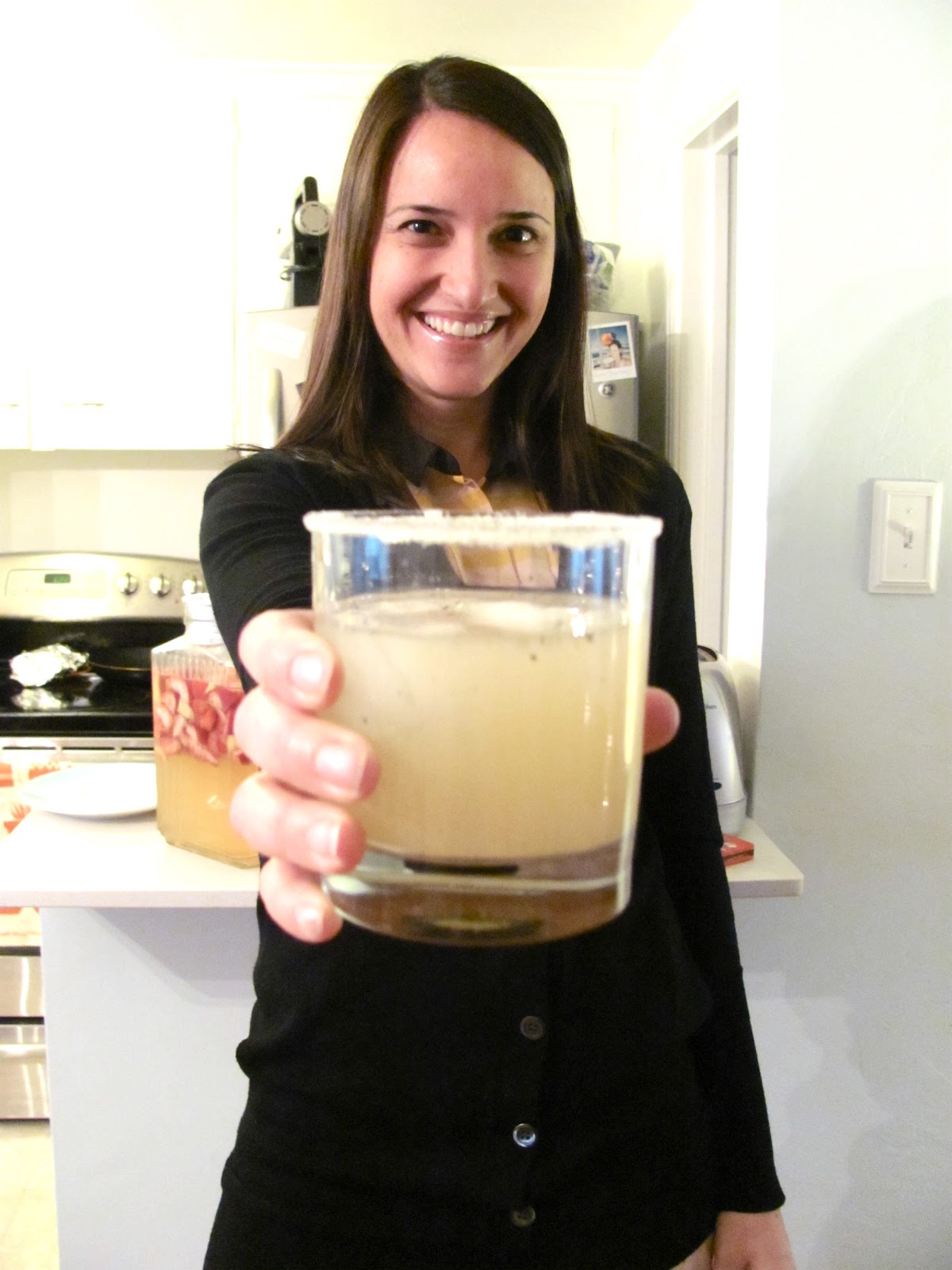
She also made a pear vanilla cocktail found on our friend Dulcie's blog. Unfortunately, our book club is cursed, so that even if the days prior to and following it are beautiful, it is always chilly and rainy at our bookish get-togethers. Still, the summery drinks were enjoyed by all.


Here is the gift basket we made Marissa. Because she was so busy with school and work, we wanted to give her a variety of things to help her relax and/or get her mind off things, like (obviously) The Hunger Games.


You see that Courtney had to throw on her fancy rain coat before we went out due to the inclement weather (after the official meeting/discussion portion of the evening had concluded). One of these days, we'll get to have a summery backyard book club.

Review/Discussion
Only one of the Bookworms finished Ender's Game before the meeting. One of us was in the family way, one was finishing up her semester, and the other two were just plain lazy. Well, that and they weren't totally taken with the novel. Ender's Game is a novel about children in a future world where aliens (called "buggers") are a real threat are brought up to be vicious soldiers. It won the Hugo and the Nebula awards, two of science fiction's highest honors. But for whatever reason, it just didn't draw all of us in. Courtney's husband heard what our next read was and said, "Yeah, that's a great book if your a seventh-grade boy." We didn't feel quite that way about it, but still I wouldn't say it was our favorite read. Which brings us to ratings: Kayla gave it 3.8 stars (out of 5), I gave it 3, and Courtney gave it 3.5, and the words we associated with it were "giant," "bugger," and "simulation."

To be more specific, some of us were a little bored by all the mock-battle scenes, of which there are a lot. I personally cannot visualize the battle maneuvers the book describes, so those became a great opportunity for me to zone out. This sentiment wasn't universally felt by all the Bookworms, nor was the next. Some of us had a hard time relating to the main characters, including Ender. I think we found the children's cold intellect, aloofness, and violent tendencies unlikeable. But, we also wondered how much of that was supposed to be due to their society and their experiences at the relentless battle school (nature versus nurture). After all, it was their society that placed such value on those characteristics and their society that created the battle school they attended. On the other hand, Ender's brother never attended battle school, and he was basically a psychopath, and Ender himself killed another child before he ever started serious training. Ender does become more vulnerable at the end and reveals his desire for love and affection, which he's never received. Courtney wondered if there were religious undertones, e.g., everyone is capable of great evil but must fight those tendencies. We weren't sure if the name Peter (Ender's brother) had religious undertones, and a quick Internet search told me that Peter showed a lack of faith or courage on a couple of occasions, but ultimately he never stopped believing in Jesus and was fundamental in establishing Christianity after Jesus's crucifixion ... for what that's worth. On another positive note, there are a few twists at the end that make it more interesting, and we've also heard that the second book is much more engaging.

–Bess

Sunday, March 4, 2012

Meeting Notes: Extremely Loud and Incredibly Close

The Bookworms were small in number this month; I'd like to say that we were, nonetheless, big on ideas but we had a birthday dinner to go to and were a little distracted. Kayla, Melisa, and I met at Sketch to discuss Extremely Loud and Incredibly Close over sparkling white wine and a plate of appetizers.


The novel, in brief, is about a little boy whose father died in the World Trade Center on 9/11 and who then decides to piece together clues about his dad's life. The biggest clue is a key inside a vase that he finds in his dad's closet. More myseteriously, the word "black" is written on it in his dad's handwriting.

We started out with ratings, and the novel got 5 stars from each of us. Because of the limited time, we were only able to delve into the book's characters and the author's writing style. We all absolutely loved Oskar. I've heard that some critics found the seven year old "annoyingly pretentious," but he didn't strike us that way at all. We thought he was cute, sweet, and quirky, and we really felt for him as a character because of what he had experienced. We also liked his mom, although at first some of us thought she was a little neglectful. His grandma and grandpa were also really intriguing, likable characters.


I found it interesting—and impressive—that even though very little actually happens, the novel is still riveting. Most novels are composed of scenes that put together make up the plot. This novel was mainly made up of the characters' reflections on things that had happened to them in the past. For instance, it starts with Oskar describing all his new inventions and then remembering the day of his dad's funeral. Maybe because the characters were so well developed and they'd lived through such traumatic events that being in their heads was really interesting. The novel switches from Oskar's point of view to his grandpa's and his grandma's, and we thought the author's efforts at creating unique points of view were very successful. Each section was written in a unique and believable way, and moreover each storyline was compelling.

I thought about the book later, and it struck me that there were some really interesting themes running through it. For instance, there were lots of keys and locks and puzzles to solve. That, put together with the tragedy of 9/11 and the bombing of Dresden (also mentioned), made me wonder if the book is exploring the issue of how an individual ever gets over, or even comprends, some of the terrible things that happen in the world. There were a lot of differment means of expression used effectively and ineffectively, like letters, images, speech, and notebooks. That made wonder if, building on the previous point, there is a question of whether any of these means of self-expression are ever fully effective at expressing the human condition. Finally, Oskar asks all the people with the last name of Black if they know anything about his dad, and it turns out they have almost all been affected by 9/11 in some way. I think maybe the book is also exploring how traumatic events effect not just the individual but a whole city.

Finally, we ended with one word.


Have you read this novel? What did you think of it? Did you have a personal reaction to it? Did you have different ideas about the themes?

Saturday, December 24, 2011

Meeting Notes: Ready Player One


December's book club was quite fun. We met at Kayla's to discuss Ready Player One, to eat delicious food, and to exchange gifts. In fact, it was pretty much a perfect night until we left the house.

Kayla made a mushroom gruyere tartkale salad, and rosemary chocolate chip shortbread. To drink, she mixed rosemary infused vodka with pear juice, blackberry Izzie, and soda water. Let me just say, it was really, really good. This drink needs a name. Ideas? We listened to a Ready Player One playlist full of fun eighties music- thanks, Kara!


Video Discussions:

And here's a written summary of our discussion (in case you are too busy for videos):
SPOILER ALERT!! Do not read on unless you're okay with spoilers.

Only two of us finished Ready Player One in its entirety. It wasn't the book itself that kept us from completing it; it was the craziness of the holiday season and the length of the book. I actually sped through to the end the day after book club. Ready Player One is a lot of fun. It's replete with references to Eighties pop culture and geek culture. We knew we were missing a lot of the allusions, but what we caught added both playfulness and the depth to the read. It's also an adventure story above all else and full of excitement and suspense as a result. Ready Player One is set in 2044, and environmental destruction has depleted the earth's resources and made life almost unbearable. Just as the earth was falling apart, a programming genius named Halliday invented a virtual reality called Oasis in which almost all humans now live, work, and play. Before he died, Halliday hid the rights to his vast fortune within the game. He created three keys and three gates, and the last leads to his billions. A 19-year-old boy named Wade with a tragic life is the first person to discover the copper key, which propels him into an intense race to complete the quest before an evil corporation or other "egg hunters" do. Besides being entertaining, the book hints at a lot of very interesting questions about the nature of reality, both in terms of physical versus virtual realities and the reality of the past versus our memories of it. Some of us thought that the author could have explored these issues a little more deeply. For instance, how did it really affect the people in that society to live almost entirely online? Were their prisoners of their own making, or did someone or something entrap them in this virtual world? Or contrarily, is a virtual reality stigmatized but really no worse than the "real" world? Along those lines, we all liked that the author wasn't heavy handed with his criticisms of Oasis and in fact pointed out some positives of it. 

Here is one of my favorite paragraphs from the book, which takes place as Wade is walking through a recreation of Halliday's childhood home within Oasis: "Looking around, I wondered why Halliday, who always claimed to have had a miserable childhood, had later become so nostalgic for it. I knew that if and when I finally escaped from the stacks, I'd never look back. And I definitely wouldn't create a detailed simulation of the place." I liked it because it reminded me of the nostagia the book has for the Eighties and gets at that weird disconnect between the reality of the past and our memories of it and how we can never relive the reality of the past. As Courtney pointed out, it's also connected to the idea of how a physical world differs from a virtual reality. A virtual world, like a dream or a memory, is better than the real thing in a lot of ways because we have more control over it and we can make it what we want it to be, but, maybe contradictorily, you can't affect a whole lot of change on a fake world. 

Friday, August 12, 2011

Give us a question!


This is what I've been doing this week since school starts on Monday, and book club meets tomorrow. This is my new favorite reading nook. I'm excited to discuss Before I Fall. For those of you that read along with us, feel free to submit your own discussion question in the comments (below) or via email. You can also make it anonymous. Check back Sunday for our video discussions and meeting notes.

Sunday, July 10, 2011

Discussion of Impossible on Video

Rather than doing a podcast, we decided to go with some video segments of our first book club meeting.  We didn't get everything on camera; we figured it might get long and tedious to watch. We also didn't do any editing, so apologies in advance for the initial giggling and other awkwardness.  But we are bookworms, so I suppose we are naturally a little awkward and weird. I don't think any of us was completely comfortable being on camera... Actually, Marissa looks pretty comfortable, but she's a born performer. So here are some highlights from our discussion of Impossible. Feel free to respond to our questions or to give your reactions in the comment field.  We want to hear from you! We really do.


Assuming you read the book, you know how important this song is to the plot. As I said, Marissa is the performer in the group.

**The rest of these clips contain spoilers! If you don't want to know what happens in the novel, stop watching/reading here.


In this clip, I introduce our discussion, and we each give the book a rating on a scale of 1-5.


Bess asks the first discussion question regarding the issue of date rape in the novel.


I ask an additional question, and we discuss...


Some conclusions...


We are big fans of the Name Game, so it only made sense for us to go around and say one word to sum up the book.
Our words: Fable, Impossible, Fenella, Rosemary, and Flat.

We really had fun last night. As the evening progressed, we moved away from "serious" topics and did a little bit of dancing. We then took a cab to a nearby bar.  The cabbie thought it was "hot" that we were book clubbers going for drinks.  If he saw all of these nerdy videos, I think he'd change his mind. At the bar, we had a Padraig sighting, and I believe someone actually informed this stranger that he looked exactly like a character from our book club book. His response? "How do you know what a character in a book looks like? Especially if there is no movie..." Umm... has this dude ever read a book? Because often times those things are described... Like in words...

So, all silliness aside, please join in on our discussion of the novel. What were your thoughts on our questions? What question would you have asked? What would your "one word" be? Is there anything else you'd like to see in our next video discussion? This was only our first one, so we are trying to come up with an organization that makes sense and is enjoyable to watch. Feedback is much appreciated. Just keep it nice :) It was a little nervewracking for us to put this out there. Happy reading, bookworms.

Oh! We will announce the next book shortly, so please check back.